Costume Design

The Ultimate Cottagecore Witch Costume Guide

If you're looking for a Halloween costume that's equal parts whimsical, cozy, and magical, a cottagecore witch is hard to beat. Inspired by wildflower meadows, forest walks, vintage dresses, and woodland folklore, this aesthetic feels timeless rather than trendy.

As a costume designer, I love cottagecore witch costumes because they're easy to personalize. Whether you're putting together an easy cottagecore witch costume, heading to a Renaissance Faire, or creating the perfect witchcore aesthetic outfit, it's all about layering natural textures and thoughtful accessories.

Here's everything you need to create the perfect cottagecore witch costume.

1. Start with the Dress

A beautiful dress creates the foundation for the entire look.

Look for:

  • Earth tones

  • Sage green

  • Cream

  • Mustard

  • Rust

  • Brown

  • Linen or cotton fabrics

  • Puff sleeves

  • Tiered skirts

  • Floral prints

Flowing silhouettes create the relaxed, romantic feeling that defines the cottagecore aesthetic.

πŸ‘‰ Shop my favorite cottagecore witch dresses here: (Amazon Idea List)

2. Add a Witch Hat

Unlike a traditional Halloween witch, a cottagecore witch's hat is softer and more natural.

I love hats with:

  • Brown felt

  • Moss green

  • Wide brims

  • Leather bands

  • Dried flowers

  • Twine

  • Feathers

Avoid anything overly shiny or cartoonish.

The goal is to look like you wandered out of an enchanted forest.

πŸ‘‰ Browse my favorite witch hats here: (Amazon Idea List)

3. Layer with Natural Accessories

Accessories are what really bring a woodland witch costume to life.

Consider adding:

  • Leather belts

  • Crossbody satchels

  • Vintage keys

  • Herbal pouches

  • Mushroom jewelry

  • Acorn earrings

  • Pressed flower necklaces

  • Fingerless gloves

Natural materials like wood, brass, leather, and linen help complete the look.

πŸ‘‰ Shop my favorite cottagecore witch accessories here: (Amazon Idea List)

4. Complete the Look with Boots and Layers

A cottagecore witch spends more time wandering through enchanted forests than flying on a broom, so comfortable footwear is essential.

My favorite options include:

  • Lace-up leather boots

  • Victorian ankle boots

  • Brown combat boots

  • Chelsea boots

  • Rustic lace-up shoes

If the weather is cool, layer your outfit with:

  • Knit shawls

  • Long cardigans

  • Linen aprons

  • Wool capes

  • Plaid scarves

  • Fingerless knit gloves

These layers add texture while making your costume feel cozy and lived-in.

5. Add the Finishing Touches

This is where your personality can really shine.

Consider carrying:

  • A rustic broom

  • A woven basket filled with wildflowers or herbs

  • An antique-style lantern

  • A spell book or vintage journal

  • Faux potion bottles

  • Bundles of dried lavender or eucalyptus

  • A small pumpkin or woodland mushrooms

These simple props instantly elevate your costume and make it feel like you've stepped out of a storybook.

Cottagecore Witch Costume Checklist

Before heading out, make sure you have:

βœ” Cottagecore dress

βœ” Witch hat

βœ” Leather belt

βœ” Boots

βœ” Mushroom or botanical jewelry

βœ” Satchel

βœ” Cozy layers

βœ” Rustic prop or basket

Shop the Complete Cottagecore Witch Look

I've gathered my favorite dresses, hats, boots, jewelry, baskets, cloaks, and accessories into one easy shopping guide.

πŸ‘‰ Browse my complete Cottagecore Witch Costume Essentials Amazon Idea List here.

Whether you're creating a cottagecore Halloween costume, an elegant woodland witch costume, or embracing the witchcore aesthetic, these carefully chosen pieces will help you create a magical look that's perfect for Halloween, festivals, and autumn adventures.
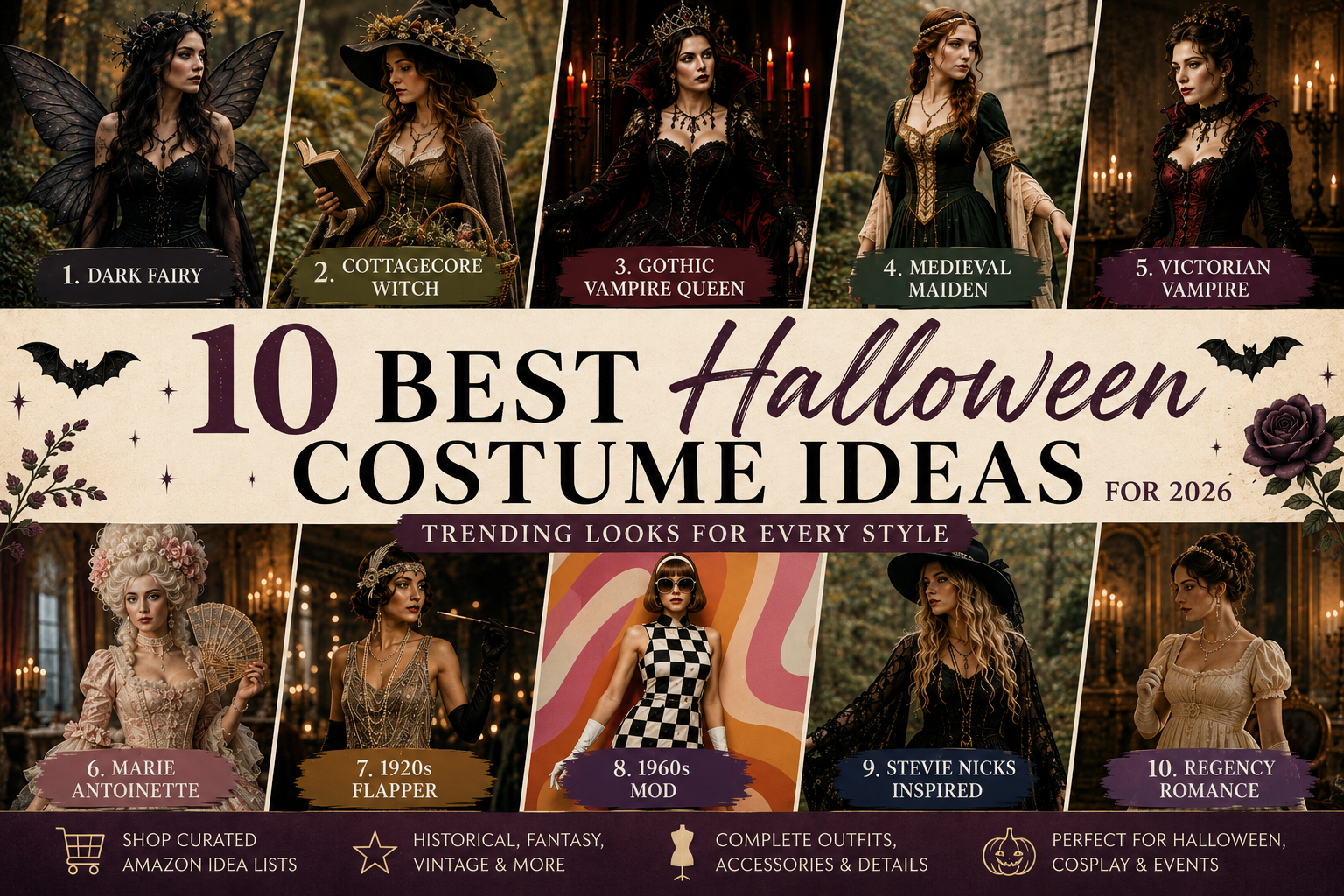
Everything You Need for a Dark Fairy Costume

Dark fairy costumes have become one of my favorite alternatives to the traditional fairy look. They're dramatic, elegant, and just a little mysterious. Whether you're creating a dark fairy Halloween costume, dressing for a Renaissance Faire, cosplay event, or fantasy photoshoot, the right combination of pieces makes all the difference.

As a costume designer, I always tell people to start with the silhouette and build from there. Here's everything you need to create an unforgettable dark fairy outfit.

1. Start with the Dress

The dress sets the mood for your entire costume.

Look for:

  • Black or deep jewel tones

  • Flowing chiffon or velvet

  • Lace sleeves

  • Corset-style bodices

  • Layered skirts

  • Asymmetrical hems

A dramatic silhouette instantly gives your dark fairy costume an enchanted forest feel.

πŸ‘‰ Shop my favorite dark fairy dresses here: (Amazon Idea List)

2. Choose the Right Wings

No accessory transforms a costume faster than a beautiful pair of wings.

For a more elegant black fairy costume, I love wings with:

  • Smoky translucent details

  • Black butterfly patterns

  • Metallic accents

  • Deep purple or emerald highlights

Oversized wings create a dramatic fantasy look, while smaller wings are more comfortable for parties and conventions.

πŸ‘‰ Browse my favorite dark fairy wings here: (Amazon Idea List)

3. Build Your Look with Accessories

Accessories are what make a dark fairy aesthetic outfit feel magical instead of ordinary.

Consider adding:

  • Crystal or thorn-inspired crowns

  • Black lace gloves

  • Elf ears

  • Vine or leaf jewelry

  • Layered necklaces

  • Statement rings

  • Decorative belts

  • Cloaks or capes

These finishing touches help create an elegant woodland dark fairy or enchanted forest fairy costume.

4. Don't Forget the Undergarments

One of the easiest ways to elevate an elegant dark fairy costume is by adding a little structure underneath.

Depending on your dress, consider:

  • A petticoat for extra volume

  • A corset or corset-style shapewear

  • Tulle underskirt

  • Comfortable shorts or bloomers

  • Opaque tights or fishnets

Even inexpensive dresses look more dramatic with a fuller silhouette.

5. Complete the Look with Makeup

Dark fairy makeup can be as subtle or theatrical as you like.

I recommend:

  • Smoky eyes

  • Glitter or metallic eyeshadow

  • Face gems

  • Soft contouring

  • Black or berry lipstick

  • Highlighter for an ethereal glow

This is where you can really embrace the fairycore Halloween costume aesthetic.

6. Finish with the Right Shoes

Your shoes should be practical enough to wear all night while still fitting the fantasy.

Some of my favorites include:

  • Victorian lace-up boots

  • Black combat boots

  • Gothic ankle boots

  • Lace flats

  • Velvet heels

If you'll be walking at a Renaissance Faire or outdoor event, boots are almost always the most comfortable option.

Dark Fairy Costume Checklist

Before heading out, make sure you've packed:

βœ” Dark fairy dress

βœ” Black fairy wings

βœ” Corset or petticoat

βœ” Crown or headpiece

βœ” Elf ears

βœ” Jewelry

βœ” Boots or heels

βœ” Dark fairy makeup

Shop the Complete Dark Fairy Look

I've rounded up my favorite dark fairy dresses, black fairy wings, accessories, boots, makeup, and costume pieces into one convenient shopping guide.

πŸ‘‰ Browse my complete Dark Fairy Costume Essentials Amazon Idea List here.

Whether you're creating an easy dark fairy costume, a dramatic gothic fairy costume, or a romantic fantasy fairy costume, these pieces make it easy to build a look that's magical, memorable, and uniquely your own.

How to Dress Like Marie Antoinette: The Complete Costume Guide (2026)

Marie Antoinette remains one of history's most recognizable and iconic style icons. Her extravagant gowns, towering powdered wigs, pearls, bows, and pastel colors make her the perfect inspiration for Halloween, historical events, themed parties, cosplay, or theatrical productions.

One of my favorite things about a Marie Antoinette costume is that it doesn't have to be museum-perfect to make an unforgettable entrance. Focus on a few signature pieces, and you'll instantly capture the elegance and drama of eighteenth-century French fashion.

If you're wondering how to dress like Marie Antoinette, here's everything you need.

1. Start with the Dress

Your gown is the centerpiece of the entire costume.

Look for:

  • Soft pastel colors

  • Floral brocade fabrics

  • Lace trim

  • Ruffled sleeves

  • Wide pannier-style skirts

  • Satin ribbon details

The bigger the silhouette, the more recognizable your costume will be.

πŸ‘‰ Shop my favorite Marie Antoinette dresses here: (link to Amazon Idea List)

2. Don't Skip the Wig

Nothing says Marie Antoinette like an oversized powdered wig.

Choose a wig that features:

  • White or platinum curls

  • Height at the crown

  • Ringlets

  • Powdered finish

For extra drama, decorate it with:

  • Silk flowers

  • Ostrich feathers

  • Pearls

  • Satin bows

Oversized hairstyles became synonymous with Marie Antoinette's royal image and remain one of the defining features of Rococo fashion.

πŸ‘‰ See my favorite Marie Antoinette wigs here: (Idea List)

3. Add the Perfect Accessories

Accessories transform a pretty dress into a convincing costume.

I recommend including:

  • Lace gloves

  • Pearl necklaces

  • Crystal earrings

  • Decorative fan

  • Choker

  • Satin ribbon

  • Cameo jewelry

Small details make a surprisingly big difference.

4. Choose Elegant Shoes

Although your skirt will hide much of your footwear, choosing the right shoes helps complete the look.

Look for:

  • Low heels

  • Satin finishes

  • Buckles

  • Embroidery

  • Pastel colors

Comfort matters tooβ€”especially if you'll be wearing your costume all evening.

5. Keep Makeup Soft but Dramatic

Classic Marie Antoinette-inspired makeup includes:

  • Porcelain skin

  • Rosy cheeks

  • Soft pink lips

  • Defined brows

  • Long lashes

For Halloween, you can exaggerate these features for a more theatrical effect.

6. Don't Forget the Undergarments

One of the biggest differences between a "costume" and a truly convincing Marie Antoinette look is what goes underneath the dress.

Eighteenth-century gowns were designed to be worn over structured undergarments that created the wide, dramatic silhouette associated with Rococo fashion. While you don't need complete historical accuracy for Halloween, adding one or two foundation pieces can dramatically improve the overall look.

Consider adding:

  • A hoop skirt or pannier to create the signature wide side silhouette.

  • A petticoat for extra fullness and volume.

  • A corset or corset-style bodice to create the classic eighteenth-century shape.

  • Bloomers or shorts for comfort and confidence while walking or sitting.

  • A supportive strapless bra if your gown has a lower neckline.

If you're putting together a Marie Antoinette Halloween costume on a budget, I'd prioritize a petticoat or hoop skirt before buying additional accessories. A fuller skirt instantly makes even an inexpensive dress look more luxurious and historically inspired.

πŸ‘‰ Shop my favorite Marie Antoinette undergarments and costume foundations here: (Link to your Amazon Idea List)

Marie Antoinette Costume Checklist

Before heading out, make sure you've checked off:

βœ“ Rococo-inspired dress

βœ“ Powdered wig

βœ“ Pearl jewelry

βœ“ Lace gloves

βœ“ Decorative fan

βœ“ Elegant shoes

βœ“ Soft pink makeup

βœ“ Floral hair accessories

Shop the Complete Marie Antoinette Look

I've gathered all of my favorite dresses, wigs, accessories, jewelry, shoes, and finishing touches into one easy shopping guide.

πŸ‘‰ Browse my complete Marie Antoinette Costume Essentials Amazon Idea List here.

Whether you're creating a historically inspired look or simply want to channel the glamour of Versailles for Halloween, these pieces make it easy to build a costume that feels elegant, theatrical, and unmistakably royal.

How to Start Costume Design When You’ve Never Sewn Before

If you’ve ever looked at an incredible cosplay, historical gown, fantasy costume, or theatrical design and thought:

β€œI wish I could make something like that… but I have absolutely no idea where to start.”

You are not alone.

One of the biggest misconceptions about costume design is that people think you need:

  • years of sewing experience,

  • expensive equipment,

  • advanced drafting skills,

  • or formal fashion training before you can even begin.

You don’t.

In fact, many successful costume designers started exactly where you are now:

curious, overwhelmed, and creatively excited.

As someone who has worked in costume design, fashion history education, and fiber arts for years, I can tell you this:

beginners often make costume design much harder than it needs to be.

The good news?
You do not need to master every sewing technique before creating your first costume.

You just need to understand:

  • how fabrics behave,

  • how costumes are constructed,

  • and how to start building skills in the correct order.

That’s it.

The Biggest Beginner Mistake in Costume Design

Most beginners start by asking:

β€œWhat sewing machine should I buy?”

But honestly?
That is not the first question you should be asking.

The real foundation of costume design is:

understanding fabric and construction.

Because even the most beautiful design will struggle if:

  • the fabric is too stiff,

  • too slippery,

  • too heavy,

  • too sheer,

  • or impossible to sew at your skill level.

Fabric choice affects:

  • silhouette,

  • movement,

  • comfort,

  • durability,

  • and the overall β€œfeel” of a costume.

And this is exactly where most beginners get stuck.

Start Smaller Than You Think

You do not need to begin with:

  • an elaborate ball gown,

  • screen-accurate armor,

  • or a fully boned Victorian corset.

Instead, start with projects that teach:

  • basic construction,

  • seam handling,

  • fabric behavior,

  • and fit.

Some excellent beginner-friendly first costume projects include:

  • simple cloaks,

  • fantasy tunics,

  • kimono-inspired garments,

  • elastic-waist skirts,

  • capes,

  • aprons,

  • or modified thrifted garments.

These projects help you build confidence while still creating something wearable and exciting.

Learn Fabric Before You Learn Complexity

One of the best things a beginner can do is physically interact with fabric.

Go to a fabric store and:

  • touch everything,

  • drape fabrics over your arm,

  • compare stretch vs non-stretch materials,

  • observe transparency,

  • and notice how different fabrics move.

A few beginner-friendly costume fabrics include:

  • cotton broadcloth,

  • quilting cotton,

  • lightweight linen blends,

  • felt,

  • cotton twill,

  • and basic fleece.

I usually recommend beginners avoid:

  • satin,

  • chiffon,

  • sequins,

  • vinyl,

  • and slippery stretch fabrics for their very first projects.

Those materials can be beautiful, but they are much harder to control while learning.

You Don’t Need Expensive Supplies to Begin

Another common misconception:

β€œI need a fully stocked sewing studio before I can start.”

Absolutely not.

Many beginner costume projects can be completed with:

  • a basic sewing machine,

  • fabric scissors,

  • pins or clips,

  • measuring tape,

  • an iron,

  • and simple thread.

That’s enough to begin learning.

In fact, limitations often help beginners focus on skill-building instead of perfectionism.

Costume Design Is More Than Sewing

This is important.

Costume design is not just garment construction.

It also includes:

  • storytelling,

  • color theory,

  • silhouette,

  • texture,

  • historical inspiration,

  • character analysis,

  • and visual communication.

That means even beginners without advanced sewing skills can start developing:

strong design instincts.

Some of the best ways to improve quickly:

  • study movie costumes,

  • analyze historical fashion,

  • recreate silhouettes using simple materials,

  • sketch ideas,

  • build inspiration boards,

  • and pay attention to how clothing communicates personality and era.

Historical Fashion Is an Incredible Learning Tool

One reason I love teaching historical fashion and costume design is because historical garments teach construction logic incredibly well.

You begin to understand:

  • why silhouettes changed,

  • how layers functioned,

  • how garments were structured,

  • and how fabric choices shaped movement and appearance.

Studying historical fashion improves:

  • cosplay,

  • fantasy design,

  • theater costuming,

  • and even modern fashion understanding.

And honestly?
It makes costume design far less intimidating because you begin seeing garments as:

systems of shapes and structure.

Not impossible magic.

Your First Costume Does NOT Need to Be Perfect

This may be the most important thing in this entire article.

Your first costume is supposed to teach you something.

Not impress the internet.

Every costume designer has:

  • uneven seams,

  • strange fit issues,

  • fabric regrets,

  • abandoned projects,

  • and experimental disasters somewhere in their learning history.

That’s normal.

The goal of your first costume is:

momentum.

Not perfection.

The Fastest Way to Improve

If I could give beginners only one piece of advice, it would be this:

Finish projects.

Even imperfect ones.

Because finishing teaches:

  • problem-solving,

  • construction flow,

  • patience,

  • and confidence.

And confidence matters enormously in costume design.

Ready to Go Deeper?

If you want a beginner-friendly resource that breaks down:

  • fabric basics,

  • costume construction concepts,

  • beginner materials,

  • and how to approach your first project without overwhelm,

I created:

Your First Costume: The Complete Beginner’s Guide to Fabric & Construction

It’s designed specifically for people who are excited about costume design but don’t yet know:

  • where to begin,

  • what fabrics to choose,

  • or how costume construction actually works.

Because everyone starts somewhere β€” and costume design becomes much less intimidating once you understand the foundations.